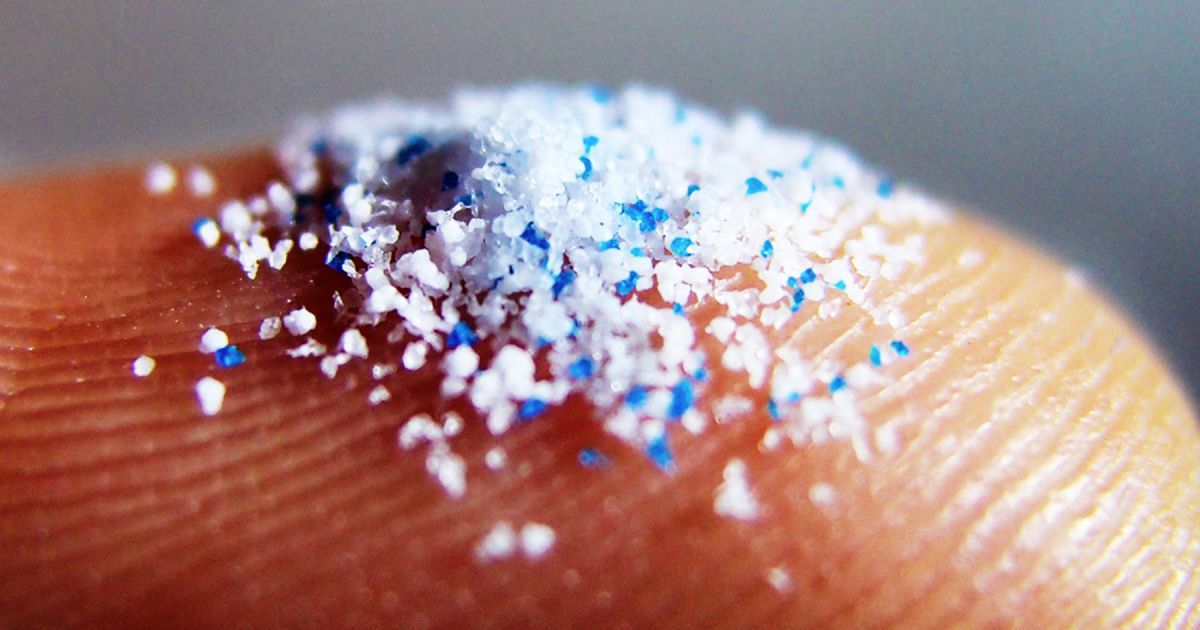
Microplastics in water: scientists discover new threat to living cells
A Columbia University study has proven that microplastics can trigger chemical reactions with water, creating compounds that damage biological structures.
 🩺Health
Photo: TSN
Key points
- Microplastics generate reactive oxygen species when in contact with water.
- Cell damage has been confirmed in laboratory conditions using erythrocytes.
- Heating plastic in a microwave accelerates the release of hazardous particles.
Microplastics, long considered a passive environmental pollutant, have proven to be significantly more dangerous than previously thought. A new joint study by scientists from Columbia University and the University of California, Berkeley, reveals that plastic particles can trigger chemical reactions upon contact with water.
Chemical activity of plastic
When interacting with water, reactive oxygen species (ROS) form on the surface of microplastics. These molecules, including hydroxyl radicals, have the ability to damage proteins and DNA. Researchers tested six common types of plastic, including polyethylene and polypropylene, finding that all of them exhibit some level of chemical activity.
Impact on organisms
Experiments on mouse red blood cells demonstrated that contact with plastic particles leads to the destruction of cell membranes. Scientists emphasize that the risk increases when heating plastic containers or storing bottles in direct sunlight for long periods, as these conditions accelerate the release of microparticles.
Source TSN — tsn.ua/zdorovya/mikroplastyk-vyiavyvsia-nebezpechnishym-niz-vvazaly-shc… ↗
Read next
 ⚽Sport
High-scoring draw in Bergamo: Atalanta and Inter finish 4-4
Atalanta and Inter Milan played out a thrilling 4-4 draw in the 12th round of Serie A. Despite a hat-trick from Francesco Esposito, the visitors were unable to secure a v…
 ⚽Sport
Artem Dovbyk set for potential move: Ukrainian striker eyes return to Spain
Ukrainian forward Artem Dovbyk has agreed to a potential move to Valencia, seeking more playing time after a difficult spell in Italy.
 🏛️Politics
Jared Kushner outlines conditions for NATO-style security guarantees for Ukraine
US Special Envoy Jared Kushner is working on security guarantees for Ukraine modeled after NATO's Article 5.
 🚌Transport
Weather in Zhytomyr: Forecasters warn of icy conditions and traffic disruptions
On Monday, November 23, weather conditions across Ukraine are expected to deteriorate, potentially affecting local transport.
 🚌Transport
Energy Security in Zhytomyr Region: Consequences of Enemy Attacks
President Volodymyr Zelensky reported on enemy attempts to destabilize the national energy system, causing power outages in Zhytomyr and other regions.
 🏛️Politics
Jared Kushner outlines Trump's conditions for security guarantees for Ukraine
Jared Kushner, special envoy for Donald Trump, stated that the US could consider security guarantees for Ukraine similar to NATO's Article 5 under specific conditions.